


Celnovix™ - Urolithin A Supplement
Celnovix™ - Urolithin A Supplement
It's the milkshake experience you crave, but now it hits different. Unreal smooth texture and a whopping 30g of protein to back up the big taste.

Celnovix™ - Urolithin A Supplement


Why Urolithin A?
-

Mitochondrial Health
Supports the cellular systems responsible for everyday energy production.
-

Healthy Aging
Designed to complement a proactive approach to long-term wellness.
-

Active Lifestyle
Daily nutritional support for adults who want to stay active as they age.


THE SCIENCE BEHIND UROLITHIN A
Urolithin A is a postbiotic metabolite studied for its relationship with mitophagy — the body’s natural process for identifying and recycling damaged mitochondria.
Research continues to explore how mitochondrial quality may contribute to healthy cellular function and healthy aging.

From Nature to Urolithin A

01 — Pomegranate & Walnuts
Natural Sources
Pomegranates, walnuts, and certain berries contain ellagitannins and ellagic acid—the dietary compounds that begin the pathway toward Urolithin A.

02 — Ellagitannins
Plant Polyphenols
These naturally occurring plant compounds can be metabolized after they reach the digestive system.

03 — Gut Microbiome
Where the Conversion Happens
Certain gut microbes can transform these dietary compounds through a series of metabolic steps that ultimately produce Urolithin A.

04 — Urolithin A
The Resulting Metabolite
Urolithin A is a gut microbiome-derived metabolite that has become an important subject of research in mitochondrial health and healthy aging.
Why Choose Celnovix Urolithin A?
-

Transparent Formula
Clear Supplement Facts and ingredient information.
-

Quality Focused
Created with consistency and responsible manufacturing in mind.
-

Easy Daily Routine
A convenient format designed for everyday use.
-

Modern Wellness
Designed to fit naturally into an active lifestyle.


DON'T JUST TAKE OUR WORD FOR IT
FREQUENTLY ASKED QUESTIONS
What is Urolithin A?
What is Urolithin A?
Urolithin A is a postbiotic metabolite that can be produced by certain gut bacteria from ellagitannins and ellagic acid found in foods such as pomegranates and walnuts. It has gained scientific interest for its relationship with mitochondrial health and mitophagy.
What does Urolithin A do?
What does Urolithin A do?
Urolithin A is studied for its role in pathways associated with mitophagy—the body’s natural process for identifying and recycling damaged mitochondria. Healthy mitochondrial function is important for cellular energy, physical vitality, and healthy aging.
Why take Urolithin A instead of just eating pomegranates?
Why take Urolithin A instead of just eating pomegranates?
Foods such as pomegranates provide precursors that may be converted into Urolithin A by the gut microbiome. However, this conversion can vary considerably between individuals because gut microbiome composition differs from person to person. Supplementation provides Urolithin A directly rather than relying on this conversion process.
How should I take Celnovix Urolithin A?
How should I take Celnovix Urolithin A?
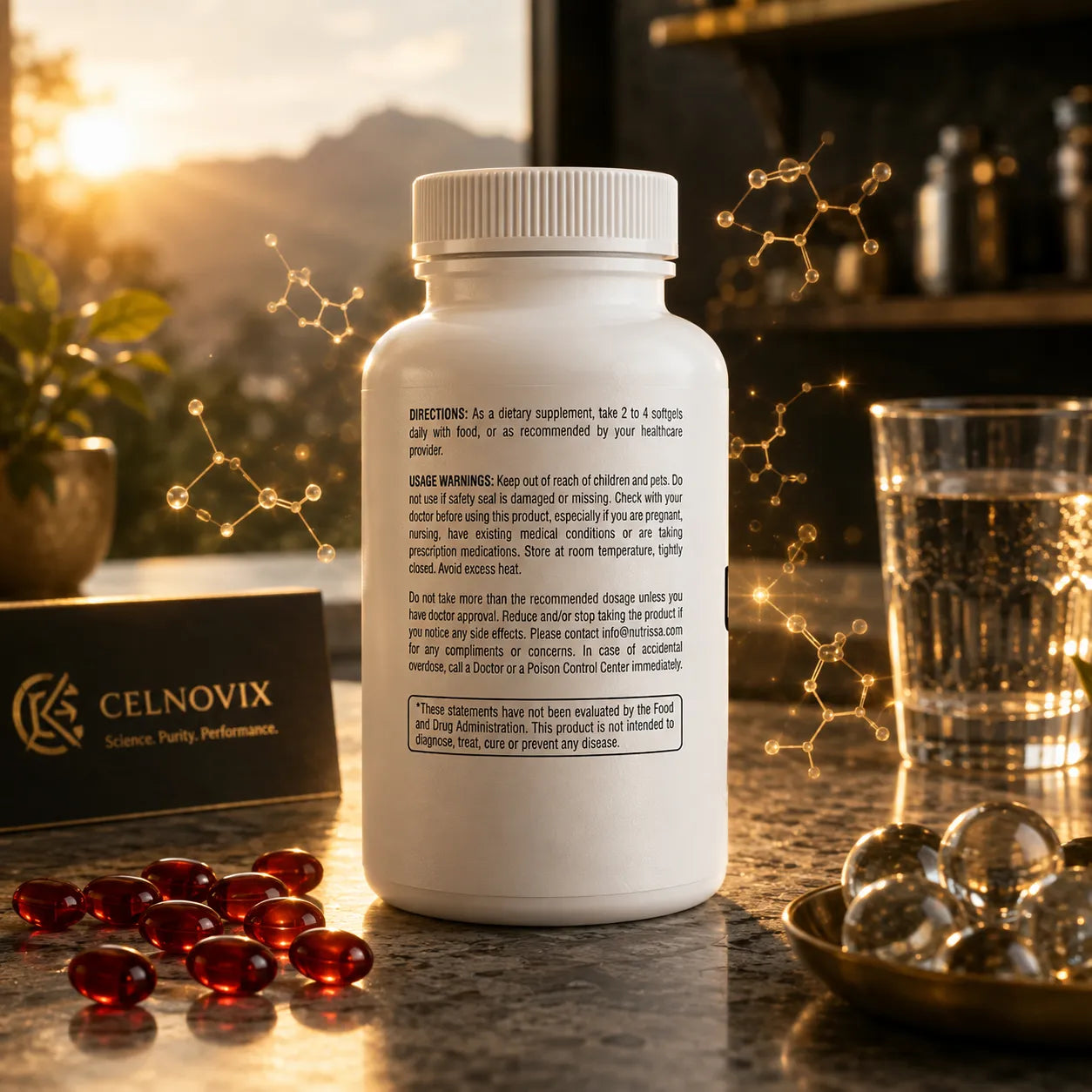
Follow the serving directions provided on the product label. Consistency is generally more important than choosing a particular time of day, so it can be incorporated into a daily wellness routine that works for you.
How long does Urolithin A take to work?
How long does Urolithin A take to work?
Urolithin A is better viewed as part of a long-term wellness routine rather than a quick-result supplement. Individual experiences can vary depending on factors such as age, diet, physical activity, overall health, and consistency of use.
Can I take Urolithin A every day?
Can I take Urolithin A every day?
Urolithin A supplements are generally formulated for regular use according to their labeled serving directions. If you have a medical condition, take medication, are pregnant or breastfeeding, or have questions about supplementation, consult a qualified healthcare professional before use.
Can Urolithin A be taken with NMN?
Can Urolithin A be taken with NMN?
Urolithin A and NMN are associated with different aspects of cellular biology. Urolithin A is primarily studied in connection with mitophagy and mitochondrial quality, while NMN is a precursor involved in NAD+ metabolism. Some people therefore include both within a broader healthy-aging routine.
Who is Urolithin A for?
Who is Urolithin A for?
Urolithin A may appeal to adults interested in mitochondrial health, healthy aging, cellular wellness, and maintaining an active lifestyle as they age. It should complement—not replace—a balanced diet, regular exercise, adequate sleep, and other healthy lifestyle habits.
Is Urolithin A naturally found in food?
Is Urolithin A naturally found in food?
Not usually in meaningful amounts. Foods such as pomegranates, walnuts, and certain berries contain ellagitannins and ellagic acid, which some gut bacteria can metabolize into Urolithin A.
